Budgeting and Spend Control
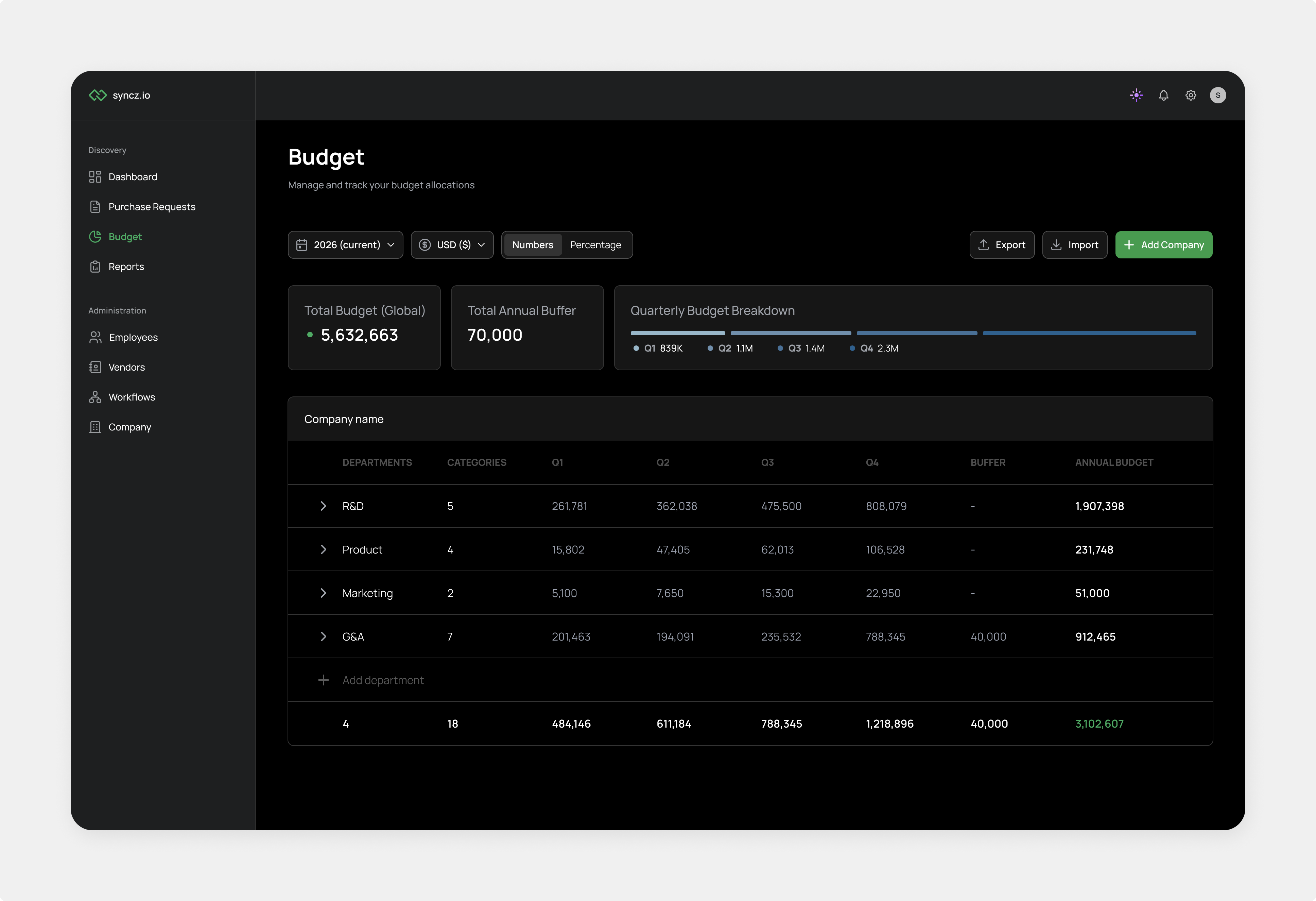
Syncz is an AI-native financial operating system that helps SMBs control how money is planned, approved, and moved. As a seed-stage startup, their core Budget Management page was struggling with critical usability challenges.
The initial version functioned as a raw data view without a clear user journey, making it difficult to understand and act on budgets:
- No clear hierarchy, limiting visibility into how budgets are structured
- Fragmented experience across planning, editing, and tracking
- High cognitive load when working with large datasets
- Inconsistent design patterns, not yet production-ready
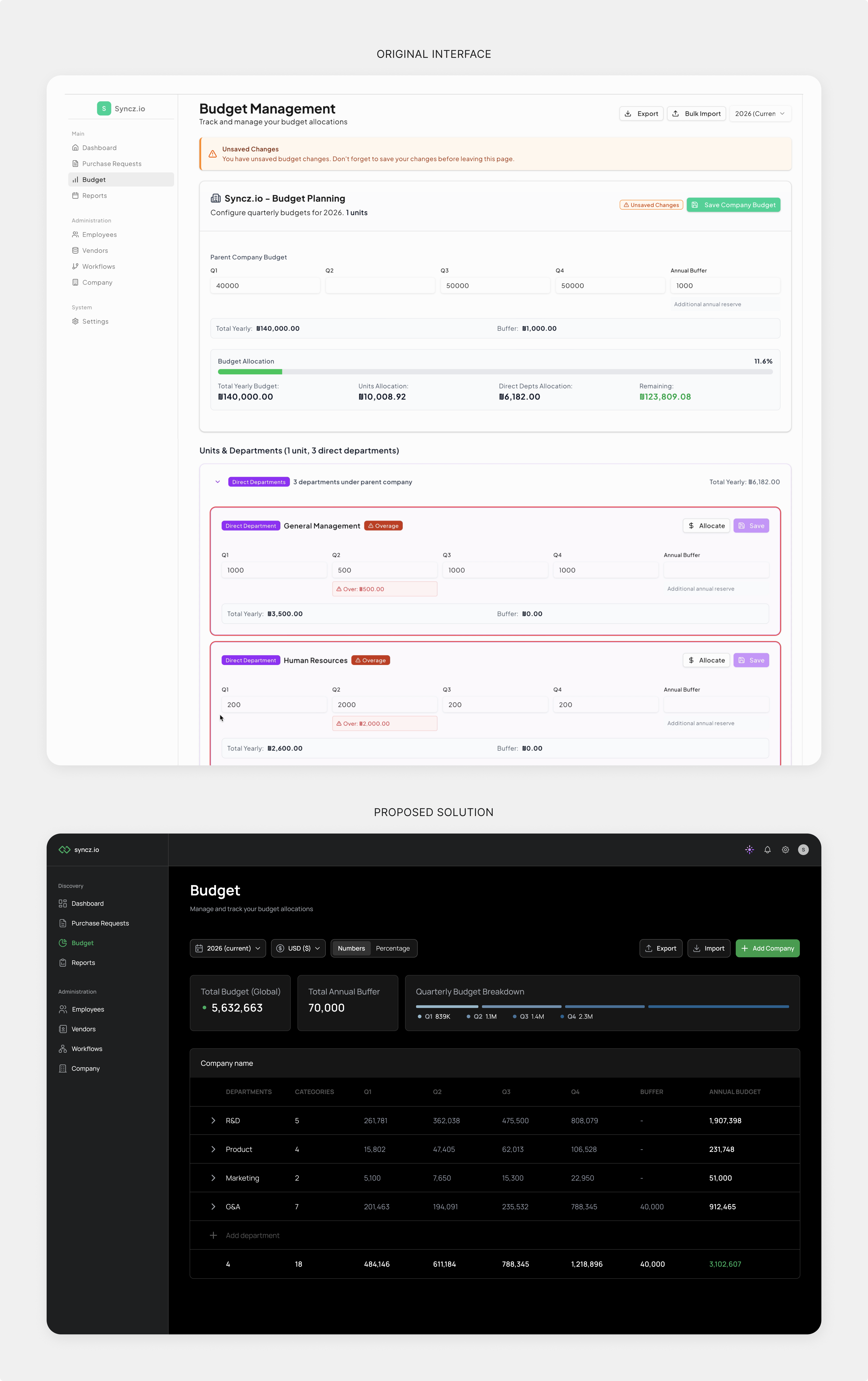
Working closely with founders and engineering, the focus was to:
- Establish a clear hierarchy across accounts, departments, and company levels
- Reduce cognitive load through better structure and data organization
- Simplify editing and allocation flows
- Build consistent, scalable design patterns
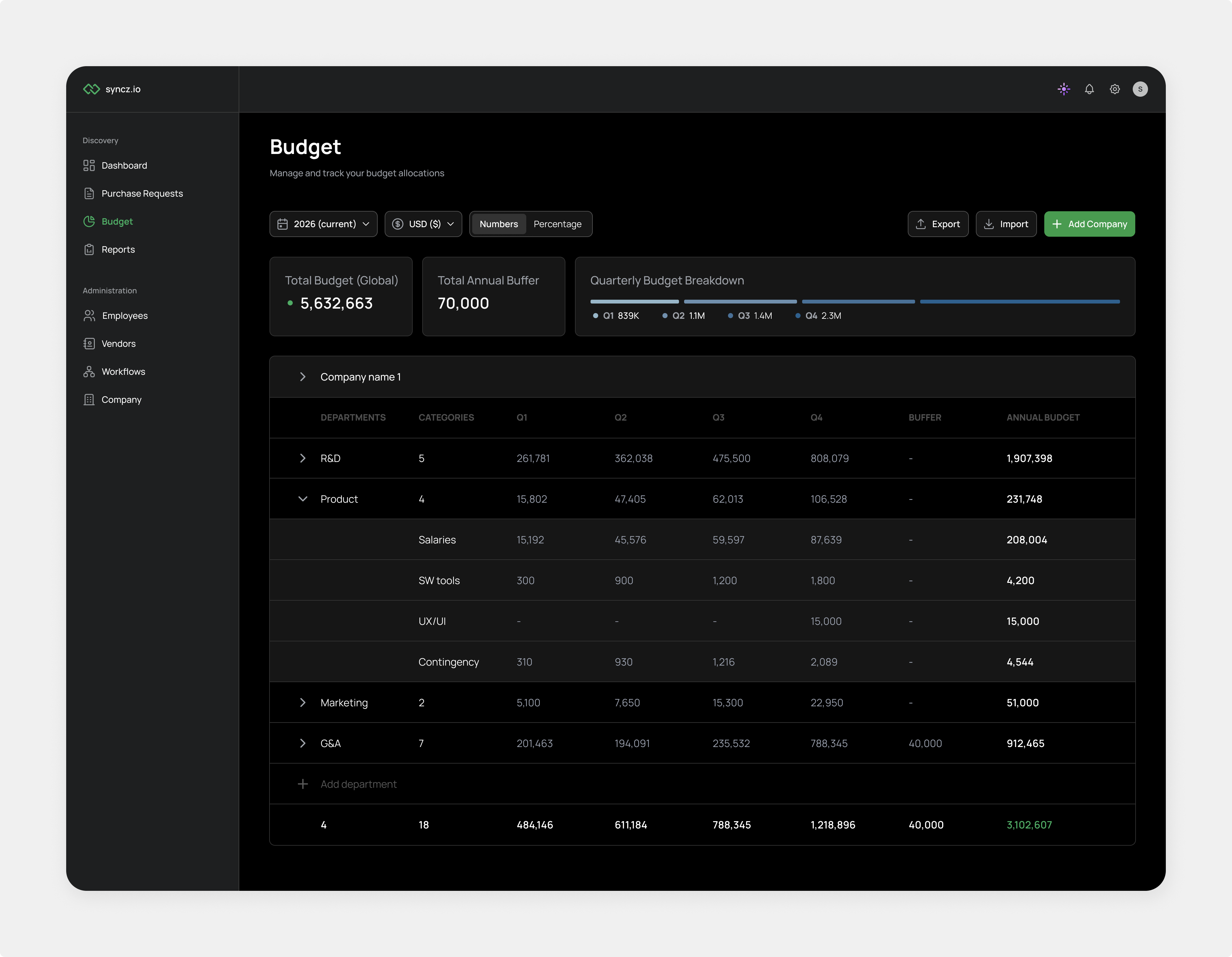
1. Nested Table Architecture
Designed a structured, hierarchical layout with nested entities and persistent context. This made relationships between budgets clear and improved navigation across different levels of data.
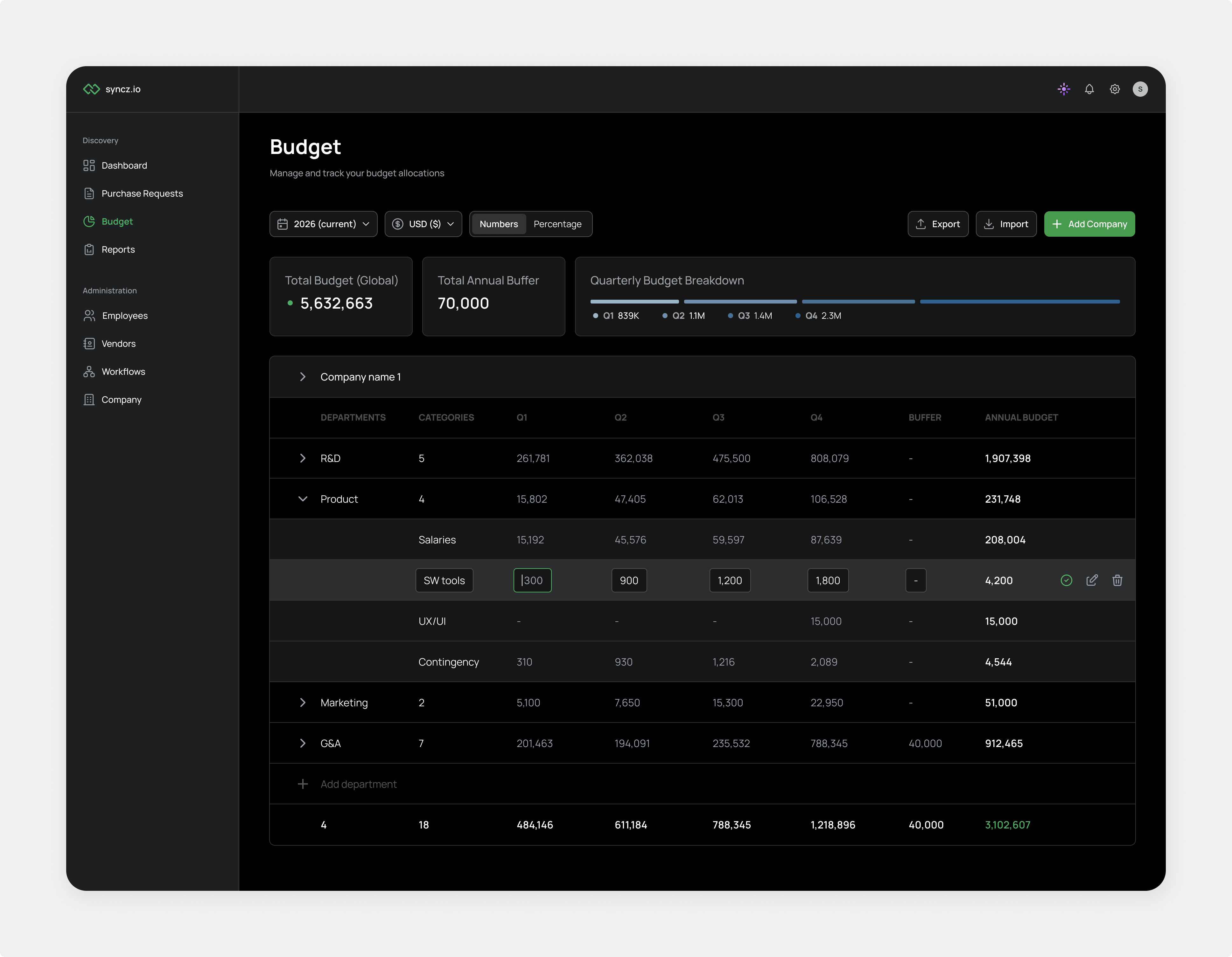
2. In-Line Editing Flow
Introduced inline editing within the table, allowing users to update budget items without leaving context, streamlining both planning and ongoing adjustments.
3. Multi-Entity Support
Enabled management of multiple entities within a unified view, supporting cross-company budgeting and improving visibility across the organization.
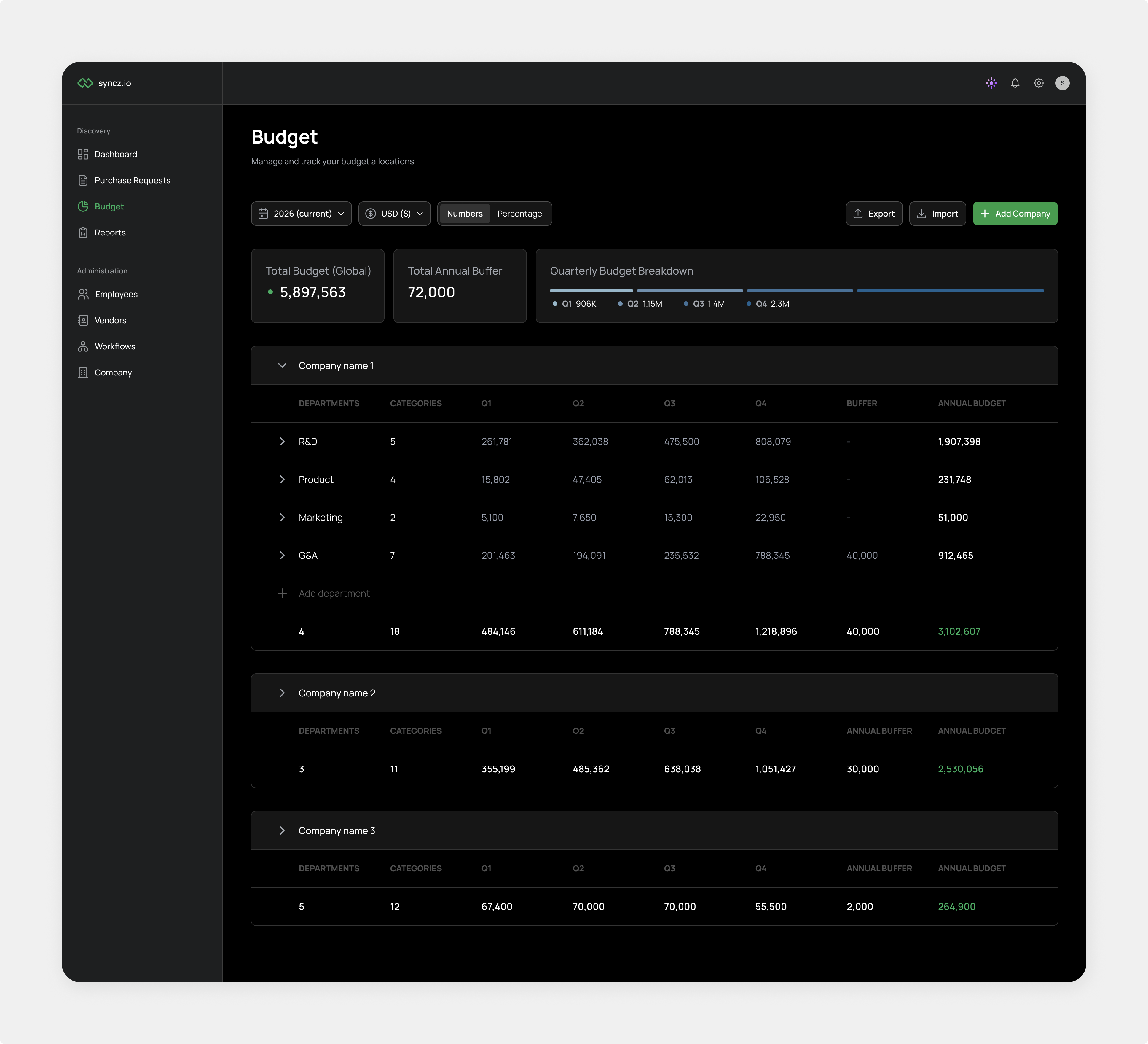
By defining core structures and interaction patterns, the system evolved from a fragmented internal tool into a cohesive, production-ready platform. The new experience reduced friction, improved clarity, and established a strong foundation for future features.